
Why Your Lender Wants an ALTA Survey Before Closing
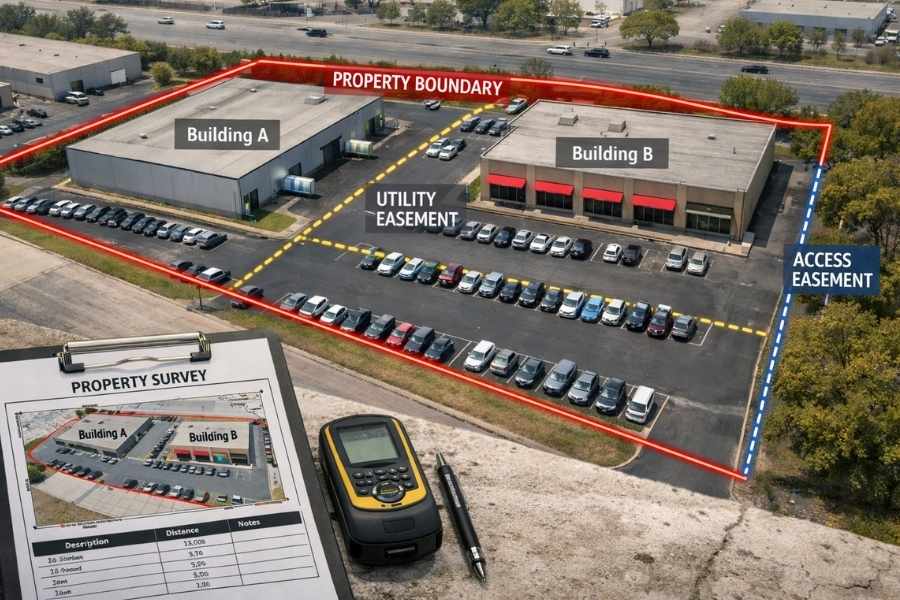
If you are buying or financing a commercial property, there is a good chance your lender has already asked for an ALTA survey. It sounds like just another item on a long checklist, but it is actually one of the most important steps in any commercial real estate deal.
So What Exactly Is an ALTA Survey?
An ALTA survey is a detailed land survey that follows a set of national standards created by the American Land Title Association (ALTA) and the National Society of Professional Surveyors (NSPS). It is the most thorough type of survey used in real estate, and most lenders and title insurance companies require one before a commercial property deal can close.
Unlike a standard boundary survey, which only shows property lines, an ALTA survey goes much further. It documents boundaries, buildings, easements, encroachments, access points, utilities, flood zone information, and more. The result is a complete, verified picture of the property that every party in the transaction can rely on.
The current standard is the 2026 ALTA/NSPS Minimum Standard Detail Requirements, which took effect on February 23, 2026. Any ALTA survey started on or after that date must follow these updated rules.
What Does an ALTA Survey Actually Cover?
Here is what every base ALTA survey includes:
- Property boundaries. The exact legal lines of the property, confirmed on the ground.
- Buildings and improvements. All structures on the property, including parking areas and paved surfaces.
- Easements and rights-of-way. Any recorded access rights, utility corridors, or shared use agreements that affect the land.
- Encroachments. Any structures or features that cross over a property line in either direction.
- Access points. How the property connects to public roads and whether that access is legally confirmed.
- Flood zone information. Whether the property falls within a FEMA-designated flood zone.
- Utilities. The location of visible above-ground utility features serving the property.
On top of the base survey, lenders and title companies can request optional add-ons called Table A items. The 2026 ALTA/NSPS standards include 20 of these optional items, covering things like zoning classification, wetlands boundaries, building dimensions, underground utilities, and neighboring property owner information. Each item adds to the cost but also adds another layer of protection for everyone involved.
How Is It Different from a Regular Boundary Survey?
A lot of buyers assume a basic boundary survey will do the job. In most commercial transactions, it will not. Here is why.
| Feature | Boundary Survey | ALTA Survey |
| Standards | Varies by state | Uniform national ALTA/NSPS standards |
| Who Accepts It | Local authorities, neighbors | Lenders, title companies, attorneys |
| What It Shows | Property lines only | Boundaries, buildings, easements, utilities, encroachments, and more |
| Typical Use | Residential, fencing, basic disputes | Commercial purchases, refinancing, development |
| Typical Cost | $500 to $2,500 | $3,000 to $8,000 and up |
The key difference is consistency. An ALTA survey follows a national standard that every lender and title company in the country recognizes. A boundary survey done in Georgia may not satisfy a lender based in another state, but an ALTA survey always will.
Why Do Lenders and Title Companies Require It?
When a lender finances a commercial property, they are putting up a large sum of money secured by that land and its buildings. They need to know exactly what they are taking as collateral. Title insurance companies face the same challenge. Before issuing a policy, they need proof that the property is legally clean and physically what the documents say it is.
A title search reviews public records but cannot tell you what is physically happening on the ground. An ALTA survey fills that gap. It can uncover:
- A neighboring building that has crept over the property line
- An easement that would block a planned new structure
- An access issue that limits how the property can be used
- Flood zone designations that affect loan terms or insurance costs
- Zoning violations that could cause legal problems after closing
Without an ALTA survey, these issues can stay hidden until after closing, when fixing them becomes far more expensive. With one, buyers and lenders can address problems before any money changes hands.
When Do You Need One?
You need an ALTA survey in any of these situations:
- Purchasing a commercial property. Most lenders will not approve financing without one.
- Refinancing a commercial property. The lender may require a new survey or a recertification of an existing one.
- Leasing a large commercial space. Major commercial leases sometimes require ALTA surveys to confirm property details.
- Developing or redeveloping a site. Before breaking ground, developers need to confirm boundaries, easements, and any restrictions on the land.
- Resolving a title dispute. If a title insurance claim or boundary issue comes up, an ALTA survey provides the verified documentation needed to resolve it.
How Much Does It Cost?
An ALTA survey for a standard commercial property typically costs between $3,000 and $8,000. Complex properties or those with many Table A items requested can run $10,000 to $15,000 or more.
Here are the main factors that affect the price:
- Property size and shape. Larger or irregularly shaped properties take more time to survey.
- Number of Table A items requested. Each optional item adds research, fieldwork, or analysis time.
- Availability of existing records. If prior surveys, deeds, and title documents are easy to access, the work goes faster and costs less.
- Urgency. Rush surveys cost significantly more. Starting the process 6 to 8 weeks before your closing date avoids fees that can be substantial.
- Location. Survey costs vary by region. Properties in the Savannah metro area tend to fall toward the middle of the national range.
How Long Does It Take?
A standard ALTA survey takes 2 to 3 weeks from start to finish deliverable. Properties that are more complex or have limited existing records may take 3 to 4 weeks. Rush turnaround of 5 to 7 business days is available from most firms, though it comes at an added cost.
The earlier you order the survey, the better. Lenders and title companies have their own review timelines, and ordering early keeps your closing date on track.
Frequently Asked Questions
Does an ALTA survey expire?
There is no fixed expiration date, but lenders set their own rules. Fannie Mae requires the survey to be no older than 360 days before the recording date. Freddie Mac requires it within 90 days of the Note date. HUD and FHA require a new survey completed within 90 days. Always confirm the requirement with your lender early in the process.
Can I use an old ALTA survey for a new deal?
Sometimes. If the property has not changed and the survey falls within the lender’s accepted timeframe, it may still be usable. A surveyor can also recertify an existing survey for a new transaction, which costs less than starting from scratch.
Do I need one even if my lender does not require it?
Most lenders will require one, but even if yours does not, getting an ALTA survey is strongly recommended. It protects your investment by making sure there are no hidden problems with the property before you close.
Who pays for the ALTA survey?
The buyer or borrower typically covers the cost as part of their due diligence expenses during the transaction.